Research Projects
Research Overview
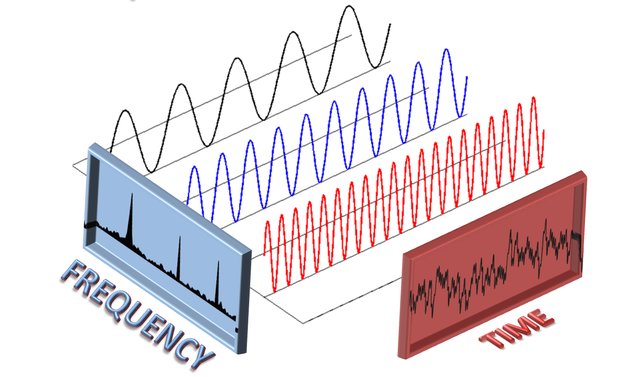 Mingzhe's research interests involve a series of different subsystems and topics of computer architectures, such as cache, NoC, NVM, performance and security. With the passion in research, Mingzhe strongly believes that the fundamental problems behind the various emerging concepts are consistent and interlinked. Focusing on these problems is the only way to avoid lost in the increasing emerging new concepts and topics, while makes continuous contributions to the rapid changing world.
 Projects
On-going project:
Fully Homomorphic Encryption Acceleration: A Full-Stack Perspective
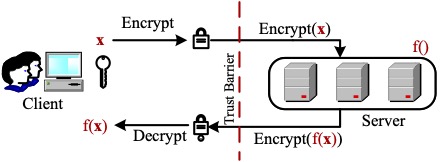 Fully homomorphic encryption is an ideal privacy-preserving data protection technology, allowing computations to be performed directly on encrypted data without decryption while ensuring the correctness of the results. However, before fully homomorphic encryption can be widely adopted in practice, its performance needs to be improved by five to six orders of magnitude. Under current technological conditions, no single technique alone can achieve such a substantial performance enhancement. Therefore, advancing fully homomorphic encryption to a practical level requires integrating performance improvements across different layers of the system, thereby enhancing the overall system performance to meet the practical requirements of fully homomorphic encryption. This research plan will conduct studies at multiple levels, including applications, fully homomorphic encryption algorithms, parallel computing, architecture, circuits, systems, and compilation. It will also focus on integrating achievements from these different levels while minimizing performance losses during integration. This research initiative is led by Dr. Mingzhe Zhang and represents a long-term plan, currently projected to span five years (2024-2029). In addition to relying on the project team, the research will actively collaborate with scholars from related fields to foster academic cooperation. The outcomes of this research will be progressively released in the form of papers, open-source software, prototype systems, technical reports, books, and other relevant formats.
Here are some examples of our past research projects:
Architectural Support for Fully Homomorphic Encryption Computation
The Fully Homomorphic Encryption (FHE) is considered as one of the most competitive privacy protection technique for cloud computing, which allows directly computation on the encryted data. However, its over-high performance overhead limits the wide application of FHE. This project focuses on providing the acceleration support for FHE with the architectural efforts, which include but not limited to commercal devices (e.g., GPGPU, FPGA), domain-specific ASIC accelerators and other emerging techniques. - Collaboration: Prof. Hang Lu (ICT, CAS)
- Funding Support: NSFC (No. 62002339); the Key Research Program of State Key Laboratory of Computer Architecture (No. CARCH4506).
- Publications: [HPCA2023-1] [HPCA2023-2]
Exploring Dynamic Trade-offs in Emerging Resistive Memory Technologies:
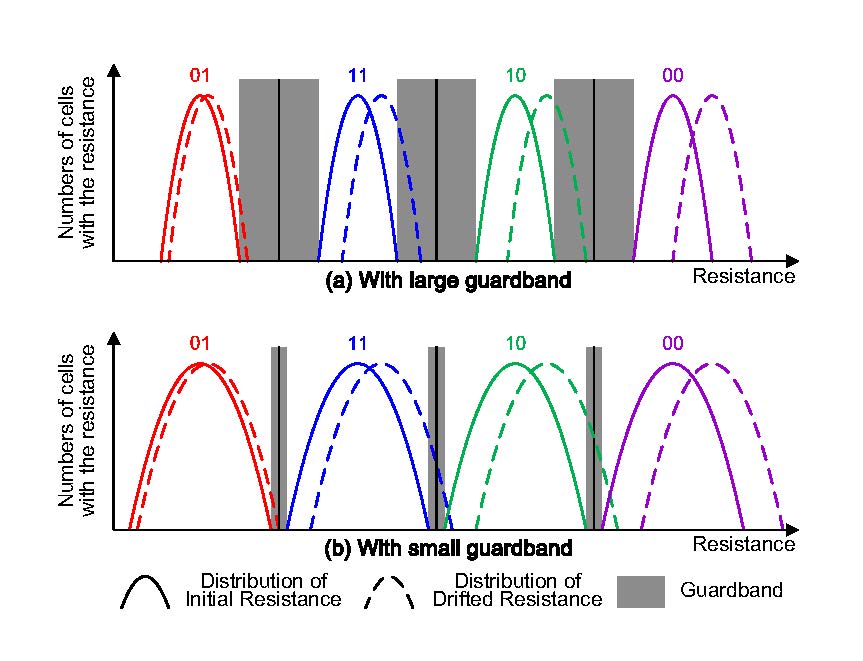 This project focuses on designing the optimization schemes based on the dynamic trade-offs lies in the Non-Volatile Memory (NVM) materials. The optimization targets include system performance, energy consumption and component lifetime. Differentiate from the previous work, our proposed schemes utilize the results of application analysis and find the "interface" for the characteristics from the different levels.
 - Collaboration: Dr. Lunkai Zhang (Western Digital), Prof. Frederic T. Chong (UChicago) and Prof. Lei Jiang (IUB).
- Funding Support: CSC (No. 201504910535); NSFC (No. 62002339); the Key Research Program of State Key Laboratory of Computer Architecture (No. CARCH4506).
- Publications: [PACT2014] [HPCA2017] [ICCD2017] [TC2019]
Optimization for Machine Learning Accelerators based on Data Sparsity:
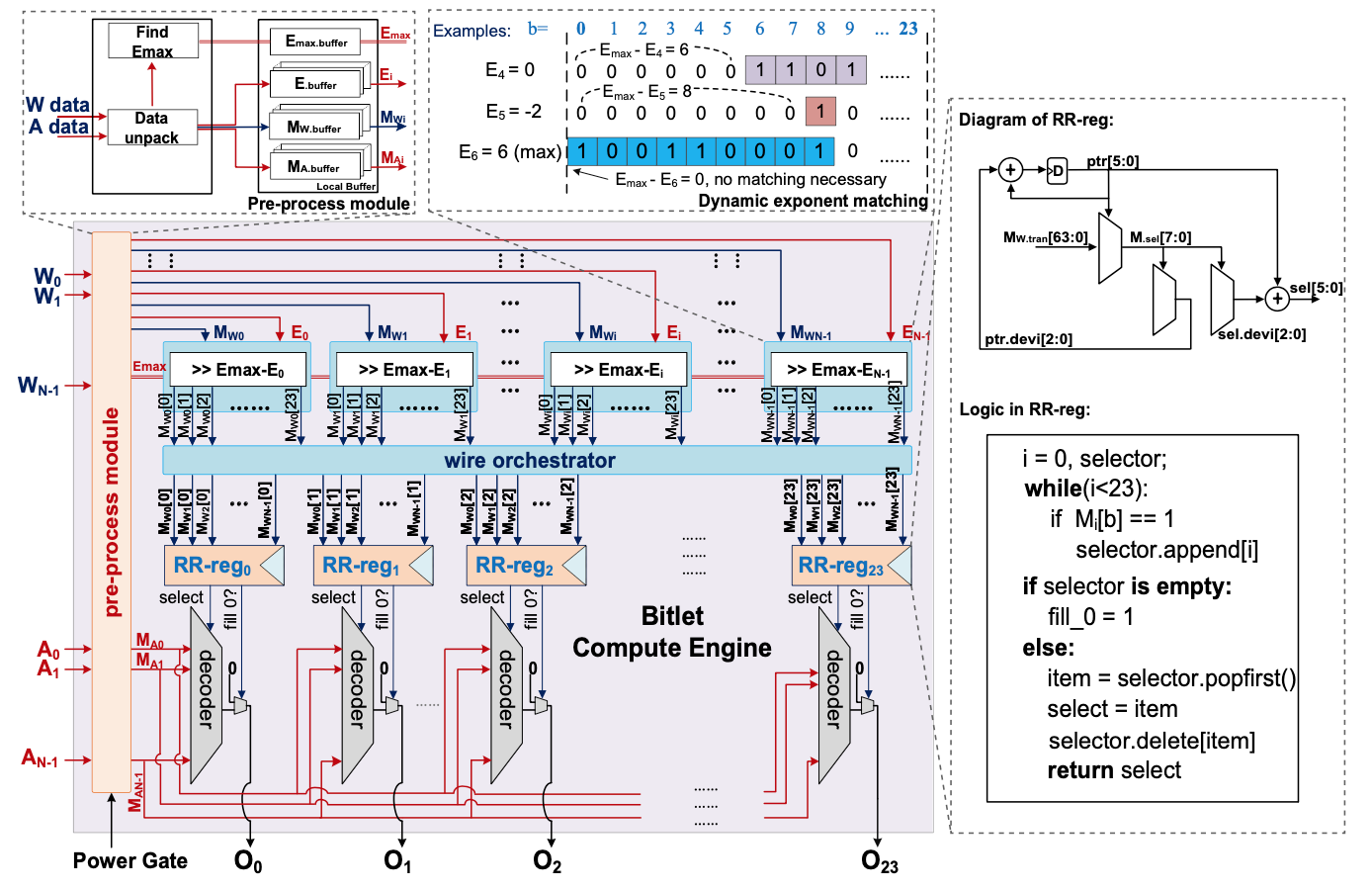 This project focuses on improving the performance and energy-efficiency for the machine learning accelerators. The proposed schemes are based on data-level or bit-level sparsity and reduce the unnecessary operations.
 - Collaboration: Prof. Hang Lu (ICT, CAS) and Prof. Liang Chang (UESTC).
- Funding Support: NSFC (No. 62172387, 62002339 and 62104025); the Strategic Priority Research Program of the Chinese Academy of Sciences (No. XDB44030200); the NSAF (No. U2030204); the Key Research Program of State Key Laboratory of Computer Architecture (No. CARCH5301 and CARCH4506).
- Publications: [TCAD2019] [MICRO2021] [ICPP2021]
Secure Computation for Data-Intensive Applications:
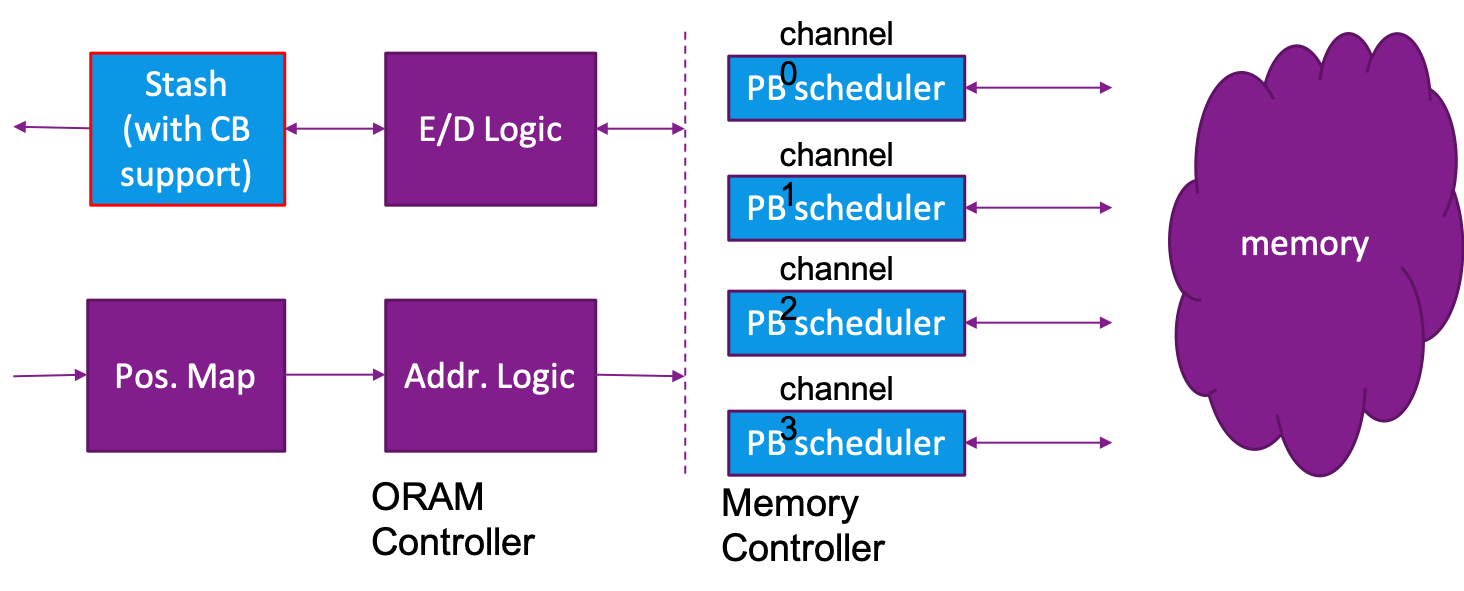 This project focuses on providing secure environment for the data-intensive applications and systems. The most important task of this project is to avoid the information leakage caused by the attack to the memory, while minimizing the impact on the performance.
 - Collaboration: Prof. Rujia Wang (IIT).
- Funding Support: NSFC (No. 62002339); the Strategic Priority Research Program of the Chinese Academy of Sciences (No. XDB44030200).
- Publications: [HPCA2021]